



Emily Grover-Kopec is a Director within the Energy and Climate practice at Rhodium Group and leads the firm’s work with the Climate Impact Lab, which provides expertise on climate science, multi-disciplinary research software development, and the creation of products that bridge the Lab’s research to decision makers. Prior to joining Rhodium Group, she spent more than a decade focusing on catastrophe modeling for the insurance industry at Risk Management Solutions (RMS), now a part of Moody’s. Emily also brings experience from Columbia University’s International Research Institute for Climate and Society (IRI), where her work concentrated on monitoring climate impacts and developing climate monitoring tools, particularly for the Global South. She has served as a member of the Climate-Related Financial Risk Advisory Committee for the U.S. Department of the Treasury and currently serves as a member of the Board of Directors for Insurance for Good. Emily holds a B.S. in Atmospheric, Oceanic, and Space Sciences from the University of Michigan and an M.S. in Meteorology from Penn State University.
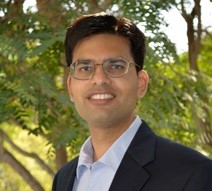
Ashwin Rode is director, scientific research in the Department of Economics at the University of Chicago. At EPIC, he is working on the Global Climate Prospectus, a multidisciplinary endeavor that will assess climate change impacts around the world. His other research areas include the political economy of environmental and climate policy and natural resource management. Ashwin received an A.B. in Economics from the University of Chicago, an M.S. in Economics from the University of Texas at Austin, and a Ph.D. in Economics from the University of California, Santa Barbara.

Genevieve Maricle served in the Biden-Harris Administration at the White House National Security Council and U.S. Agency for International Development. At the National Security Council, she served as the Director of Climate Policy, with a specific focus on climate security, resilience, and adaptation. She led implementation of the U.S. Framework on Climate Security and Resilience, and coordinated U.S. policy priorities on plastics, commodity-driven deforestation, and other pressing environmental policies. She also served as the Director of Global Development, where she oversaw the U.S. Strategy on Global Development, the Global Fragility Act, and issues at the nexus of development and climate finance and policy. At USAID, Genevieve served as Senior Advisor on Climate and Environment, where she led on international climate policy, and Senior Humanitarian-Development-Peace Advisor.
Genevieve also served as senior policy advisor on sustainable development and climate change to U.S. Ambassador to the UN Samantha Power, leading USUN’s efforts surrounding both the Paris Agreement and the Sustainable Development Goals, and for the latter, served as the deputy lead U.S. negotiator. In a previous stint at USAID, she led policy efforts on the 2030 Development Agenda/SDGs, oversaw the release of USAID’s first Climate Change and Development Strategy, and helped to set strategic budget priorities for the Global Climate Change Initiative.
Outside of government, Genevieve has served as Special Advisor for International Engagement for America Is All In – a diverse U.S. coalition supporting climate action, representing roughly two-thirds of the U.S. population and three quarters of U.S. GDP. Previously, she was the Director of Climate Policy Action at the World Wildlife Fund, leading WWF’s climate ambition and diplomacy work, the America Is All In coalition, the Forest, Food, and Land Challenge for the Global Climate Action Summit, and its work to support the UN Secretary General’s team.
She received her BA in mathematics and environmental science from Northwestern University, and PhD from the University of Colorado at Boulder in climate science policy, and served as an American Association for the Advancement of Science Diplomacy Fellow. She is currently a non-resident fellow at the Center for Climate and Security.
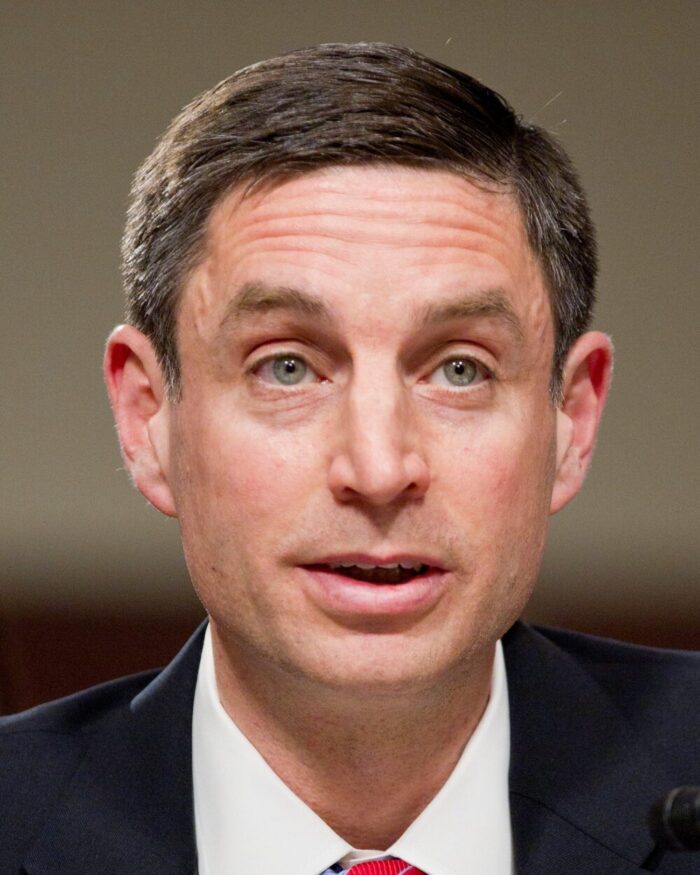
Michael Greenstone is the Milton Friedman Distinguished Service Professor in Economics at the University of Chicago. In addition, he serves as the founding director of the University’s Institute for Climate and Sustainable Growth and the director of the interdisciplinary Energy Policy Institute at the University of Chicago. He was previously the director of the Becker Friedman Institute for Economics.
During the Obama Administration, he served as the Chief Economist for the President’s Council of Economic Advisers, where he proposed and then co-led the development of the United States Government’s social cost of carbon. He is an elected member of the American Academy of Arts and Sciences, a fellow of the Econometric Society, a Carnegie Fellow (aka the “Brainy Award”), and a former editor of the Journal of Political Economy. Formerly, Greenstone was the 3M Professor of Environmental Economics at MIT and directed The Hamilton Project.
Greenstone’s research, which has influenced policy in the United States and globally, is focused on the global energy challenge that requires all societies to balance the needs for inexpensive and reliable energy, protection of the public’s health from air pollution, and minimizing the damages from climate change. Recently, his research has helped lead to the United States Government quadrupling its estimate of the damages from climate change, the adoption of pollution markets in India, and the use of machine learning techniques to target environmental inspections. As a co-director of the Climate Impact Lab, he is producing empirically grounded estimates of the local and global impacts of climate change. He created the Air Quality Life Index® that converts air pollution concentrations into their impact on life expectancy and co-founded Climate Vault, a 501(c)(3) that uses markets to allow institutions and people to reduce their carbon footprint and foster innovation in carbon dioxide removal.
Greenstone received a Ph.D. in Economics from Princeton University and a B.A. in Economics with High Honors from Swarthmore College.
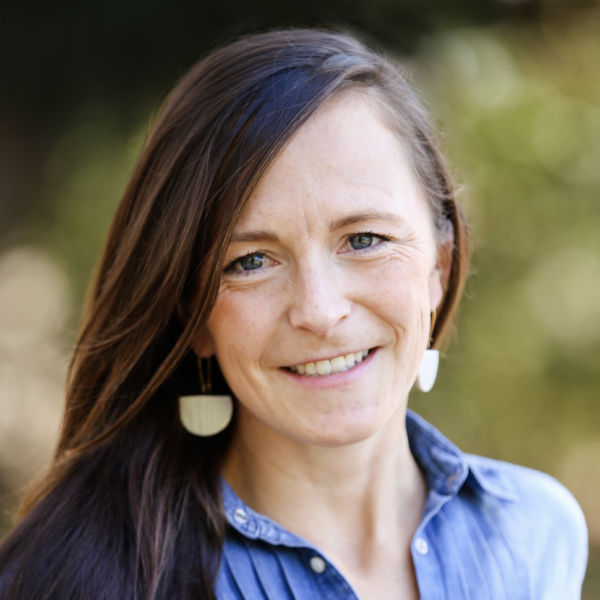
Tamma Carleton is the Faculty Head of Research for the Climate Impact Lab (CIL) and an Assistant Professor in the Department of Agricultural and Resource Economics at University of California, Berkeley. Previously, Tamma was an Assistant Professor at the Bren School of Environmental Science & Management at the University of California, Santa Barbara (UCSB) and a postdoctoral scholar in the Kenneth C. Griffin Department of Economics at the University of Chicago. Tamma’s research combines economics with data science, remote sensing, and climate science to improve quantitative understanding of how global environmental change influences and is shaped by economic development. Tamma worked with CIL while completing her PhD at the University of California, Berkeley, where she was also a U.S. Environmental Protection Agency STAR Fellow. A Rhodes Scholar, Tamma earned master’s degrees at the University of Oxford and she has a BA in Economics from Lewis & Clark College in Portland, Oregon.